

Beyond the Polar Circle, in the Russian Arctic, the indigenous people of the North have created unique cultures from ancient times, which allowed them to adapt to very severe environment and extreme climate on earth, and to firmly establish themselves on the tundra. “Tundra Reindeer Herding”
It guaranteed a constant source of food for the people who resided in those severe conditions.
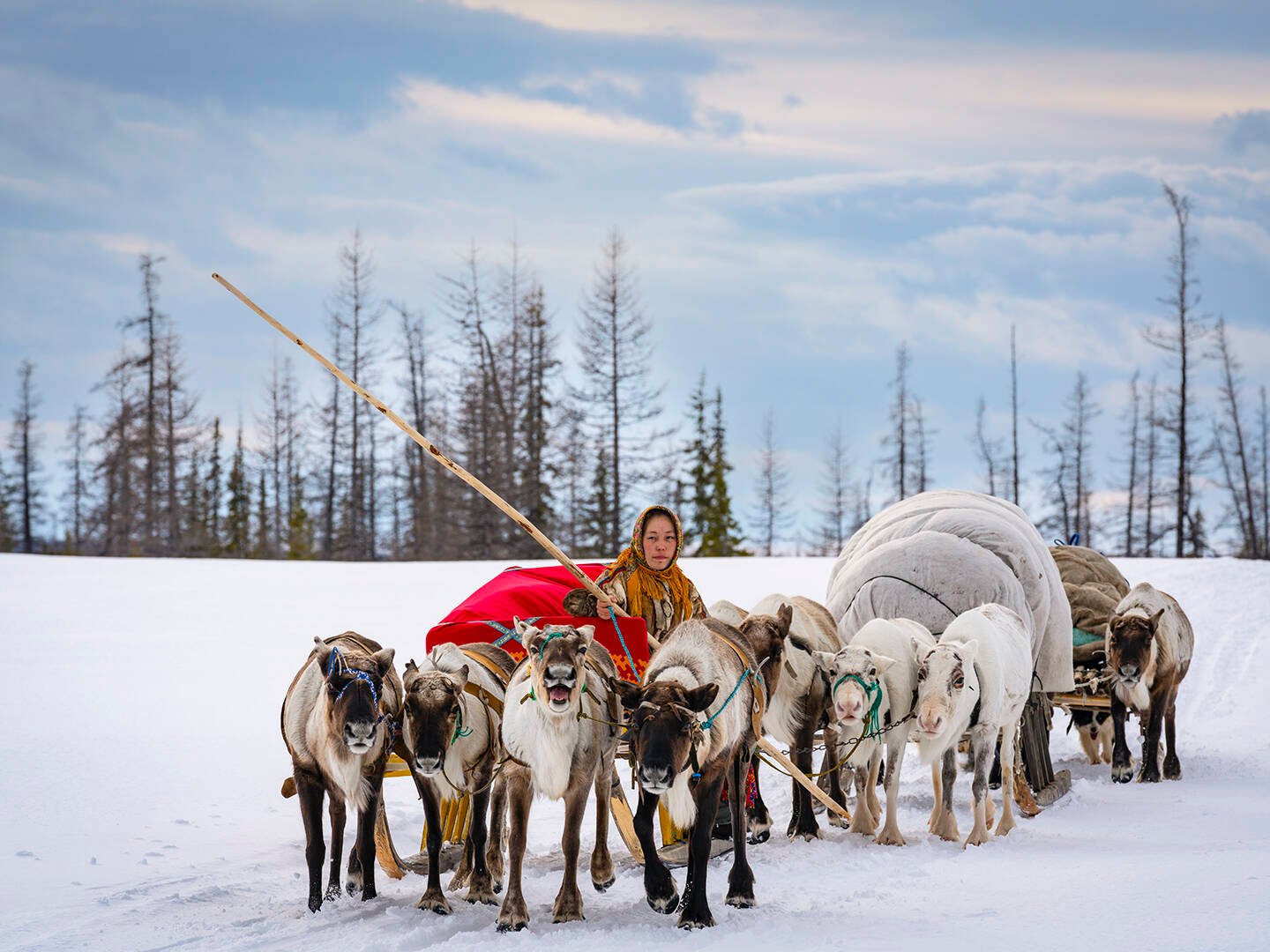
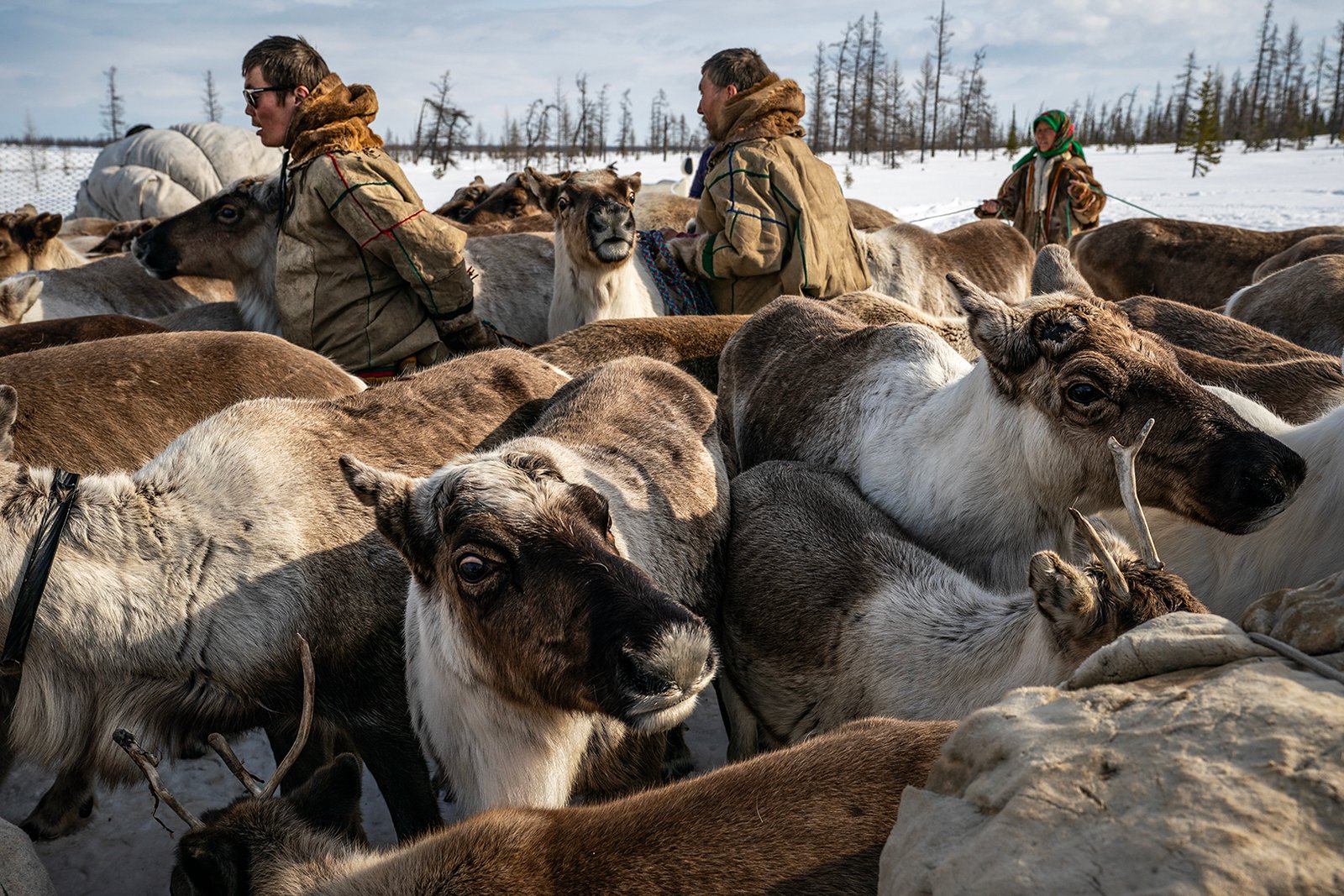
The Nenets of Siberia practice nomadic herding and have migrated across their lands over long distances (up to 1000 km annually) between summer and winter for thousands of years. Nenets live mainly in the tundra, forest rundra and Northern taiga belt of the European and Western Siberian part of the Russian Federation. They form the largest indigenous group of the Russian North and are one of the world’s great reindeer herding peoples who have come to personify large scale tundra reindeer husbandry. Herders in this region maintain close connection to their reindeer on a year round basis. Reindeer are used for meat production, traditional handicraft production and transportation . Reindeer are central to the social, cultural, spiritual and economic life of the Nenets people. Reindeer skins served as an essential material for making clothes and keeping dwellings warm.
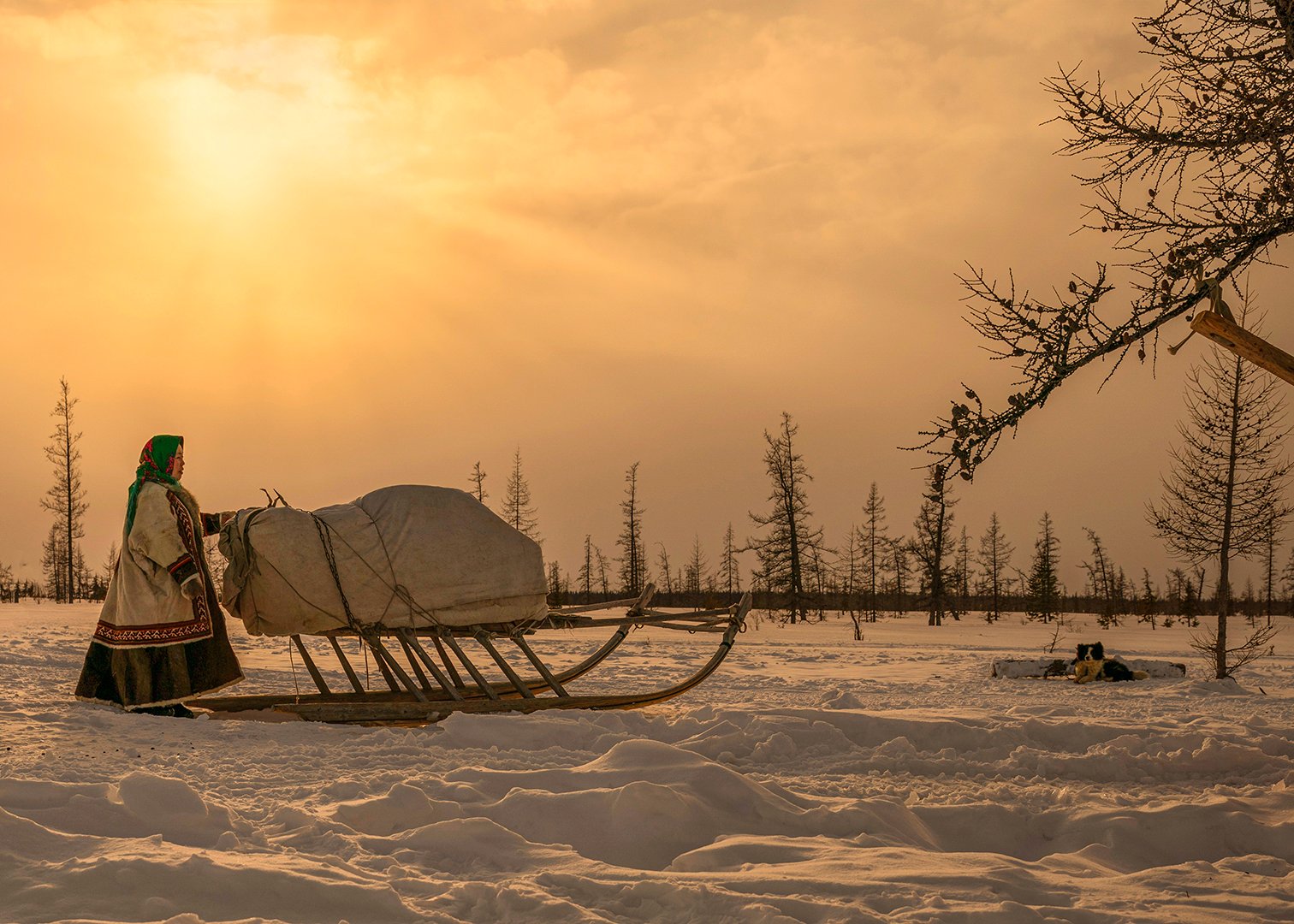
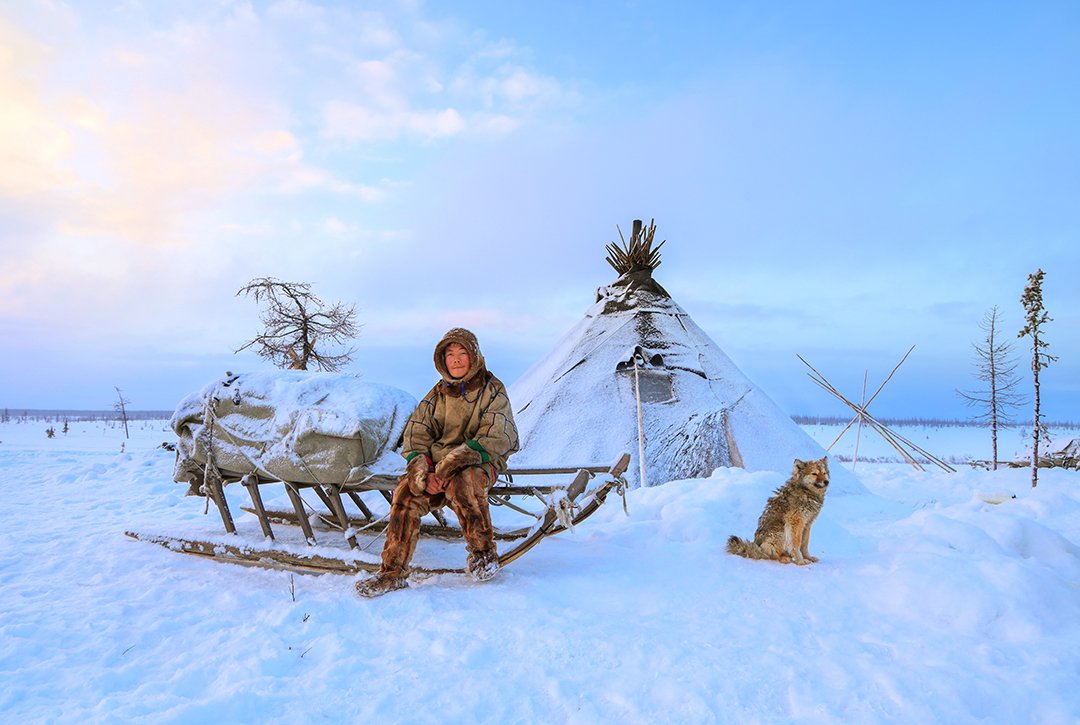
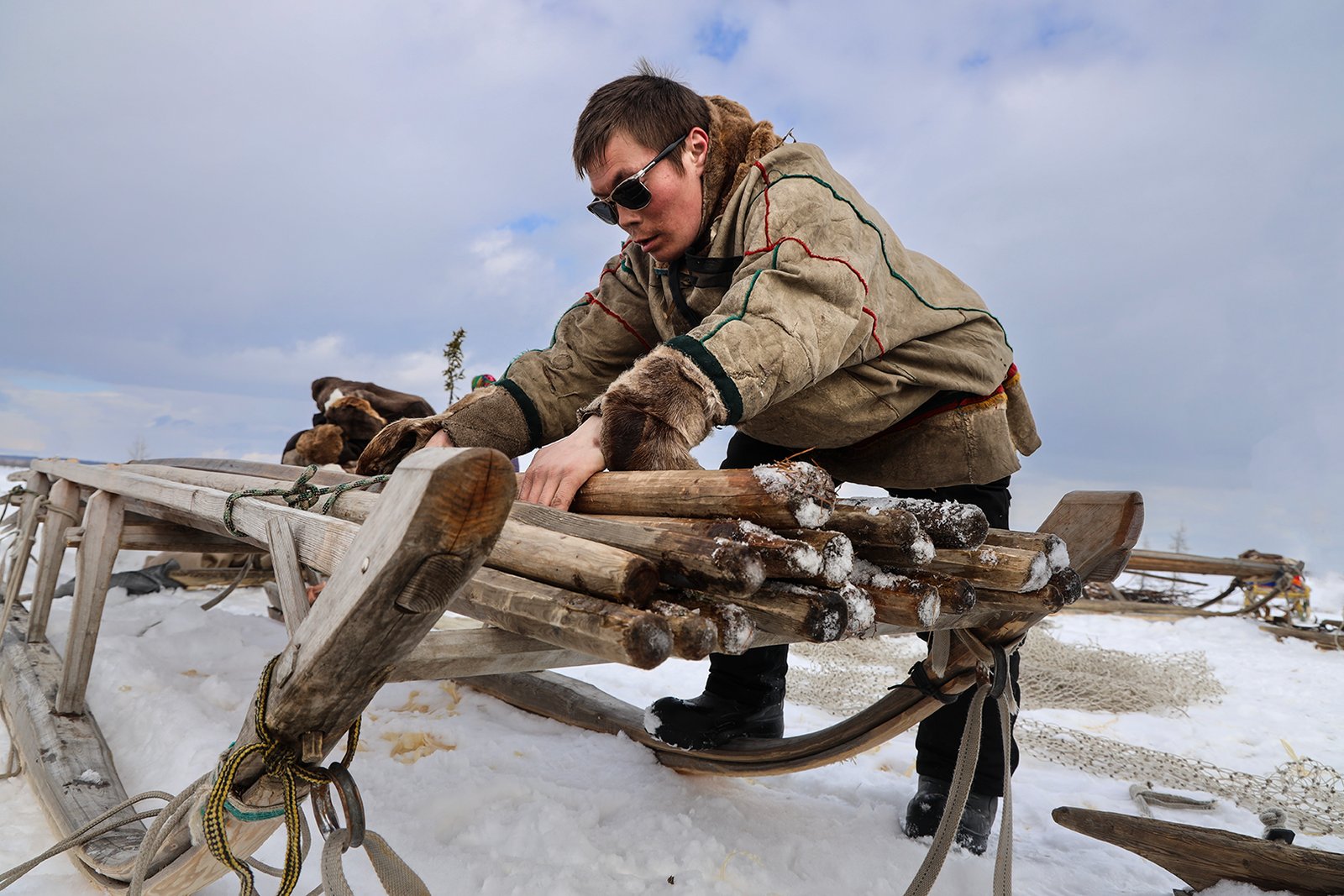
The women are responsible for keeping the dwelling in order, cooking, working with reindeer skins, using them to sew clothes and footwear, and gathering edible and medicinal plants and berries. While reindeer herdsmen watch over and herd the reindeer, they also hunt and fish. Killing and butchering reindeer as well as teaching reindeer to work in a harness are man’s responsibilities. Men train puppies to be reindeer herding dogs, make the tynzyan for catching reindeer, and choose wood for making sleds, the chore (long pole used to drive the reindeer) and tent poles.. The man also make reindeer harness components out of leather, bone and wood.
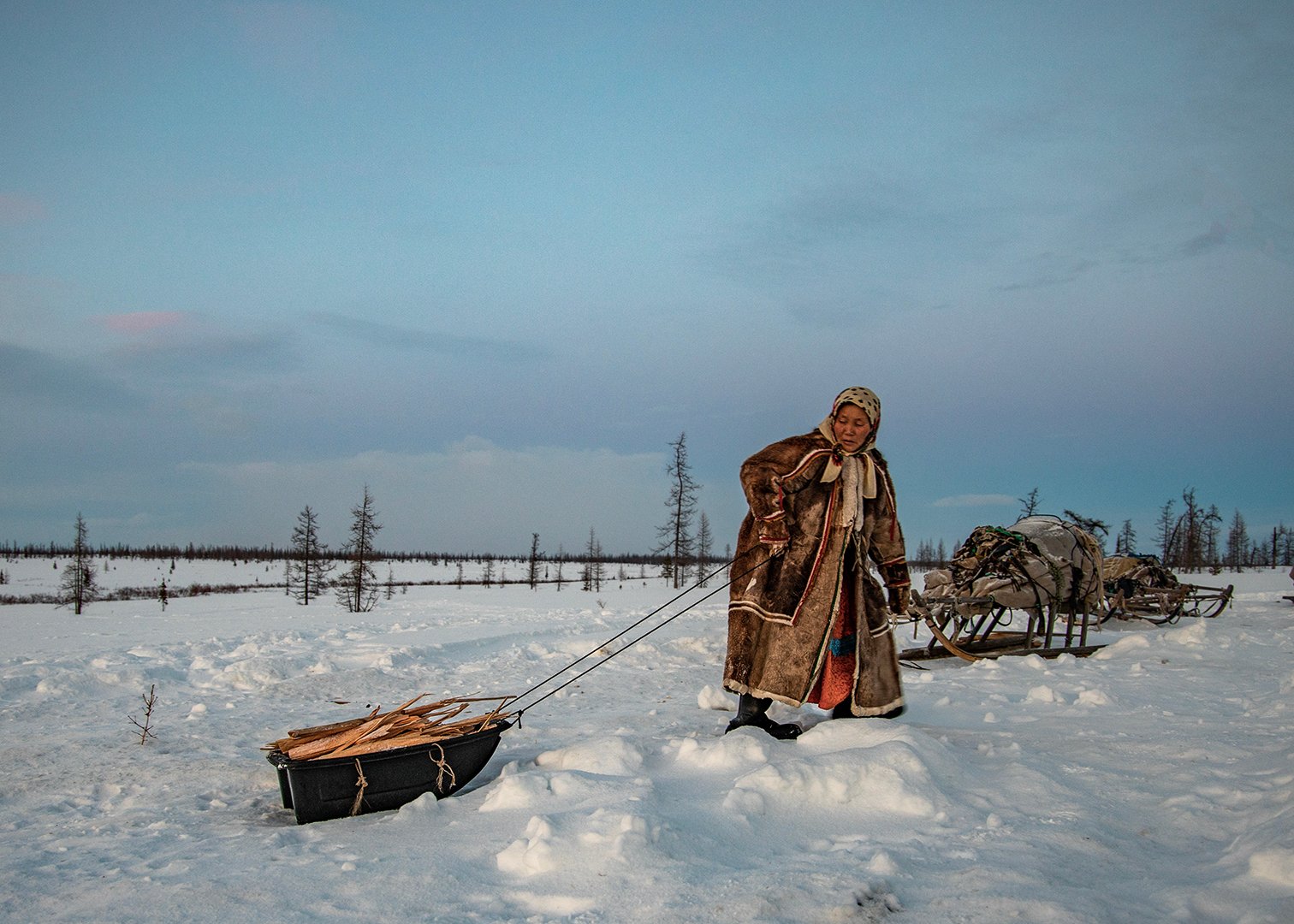
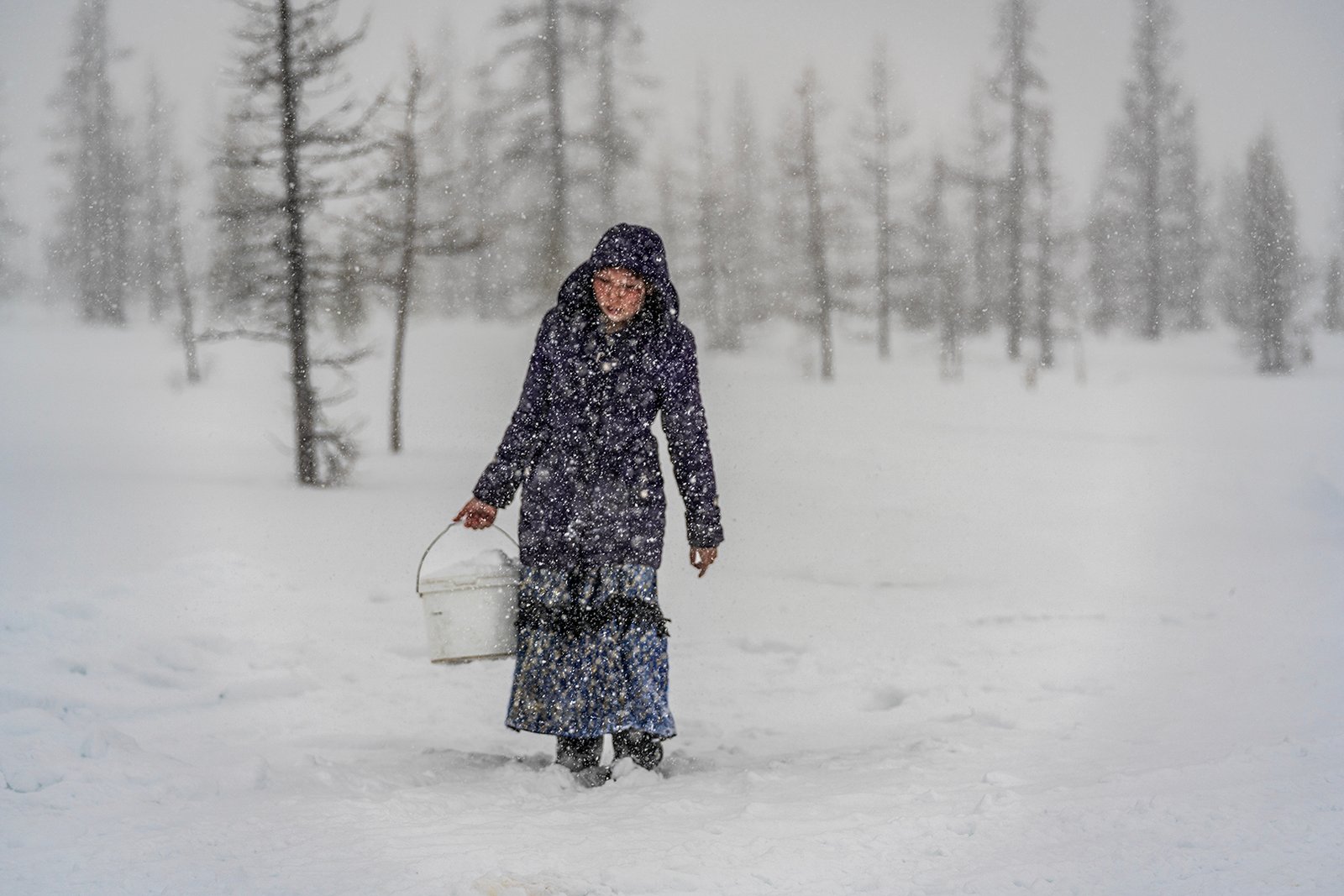
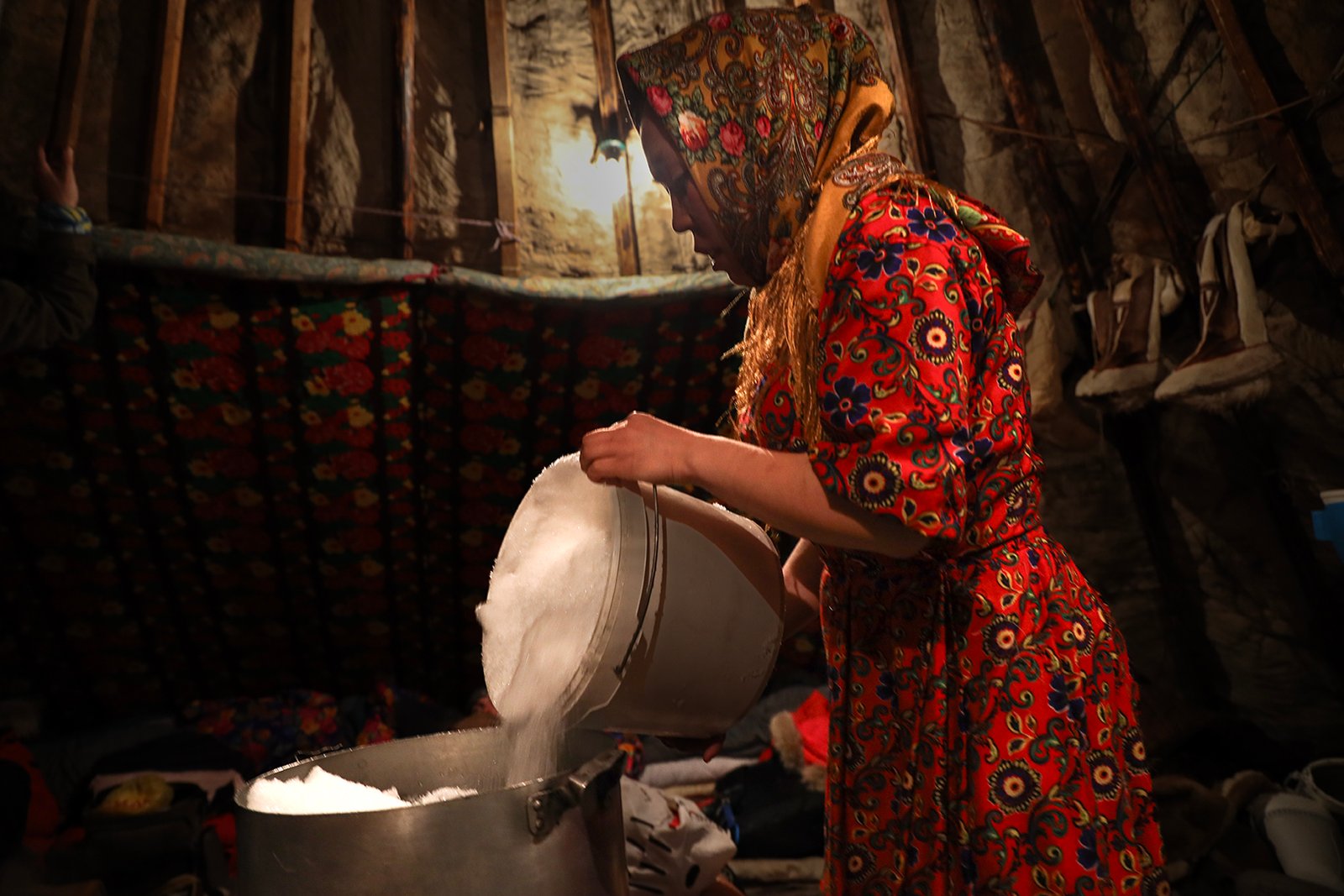
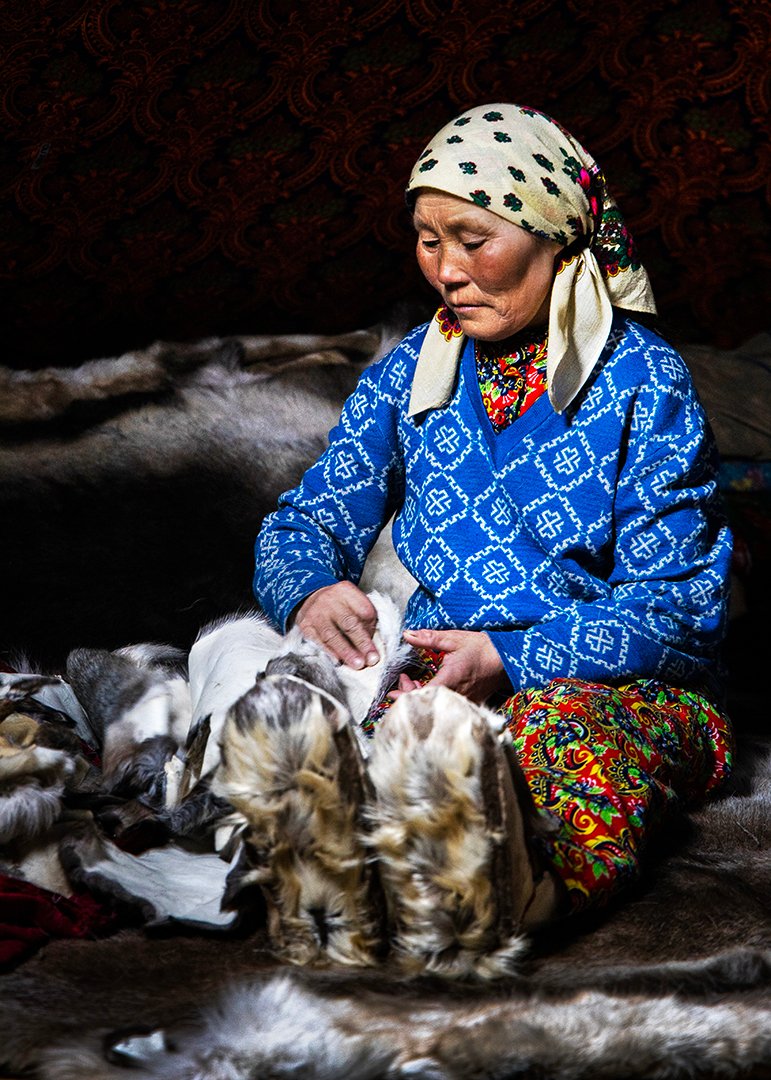
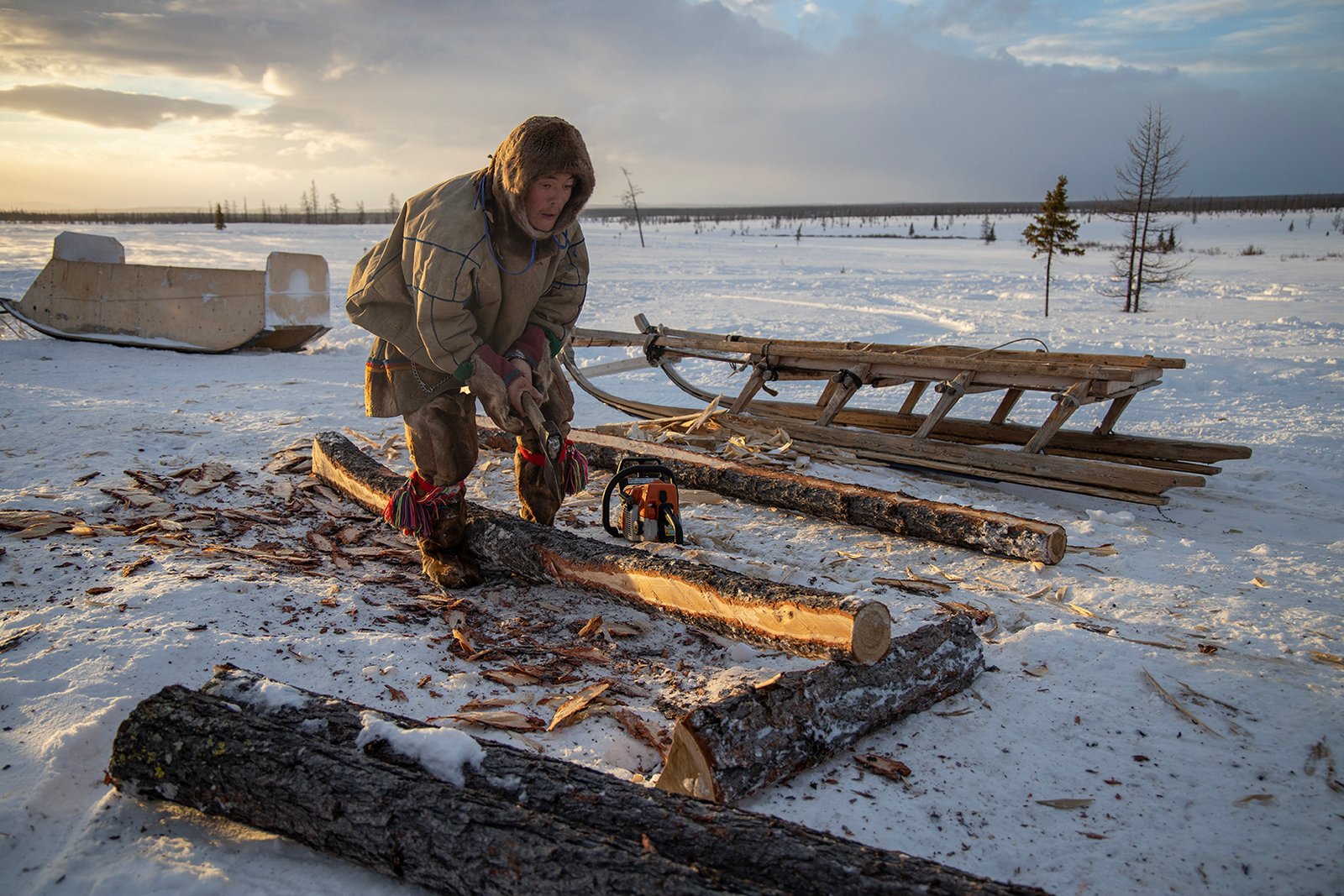
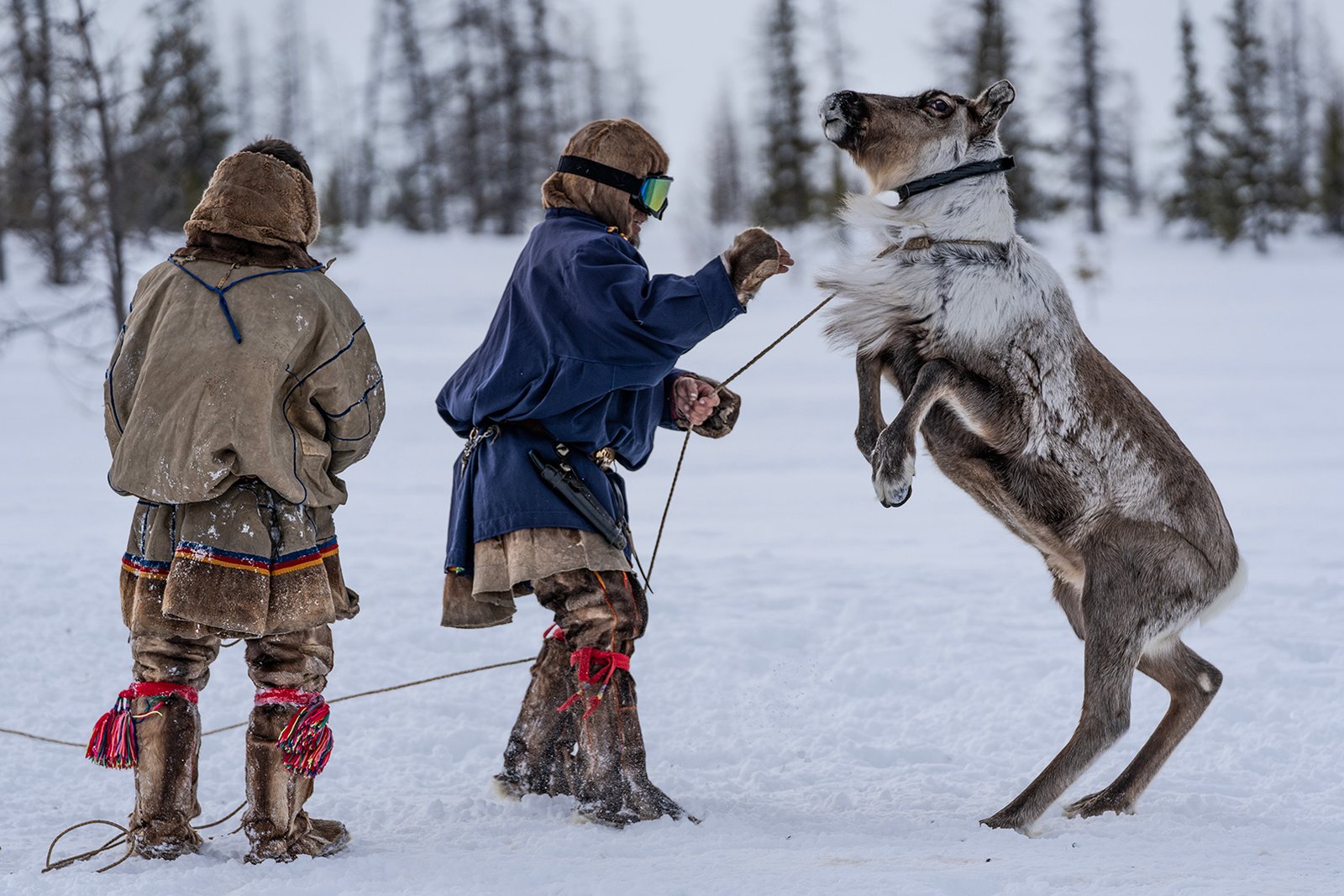
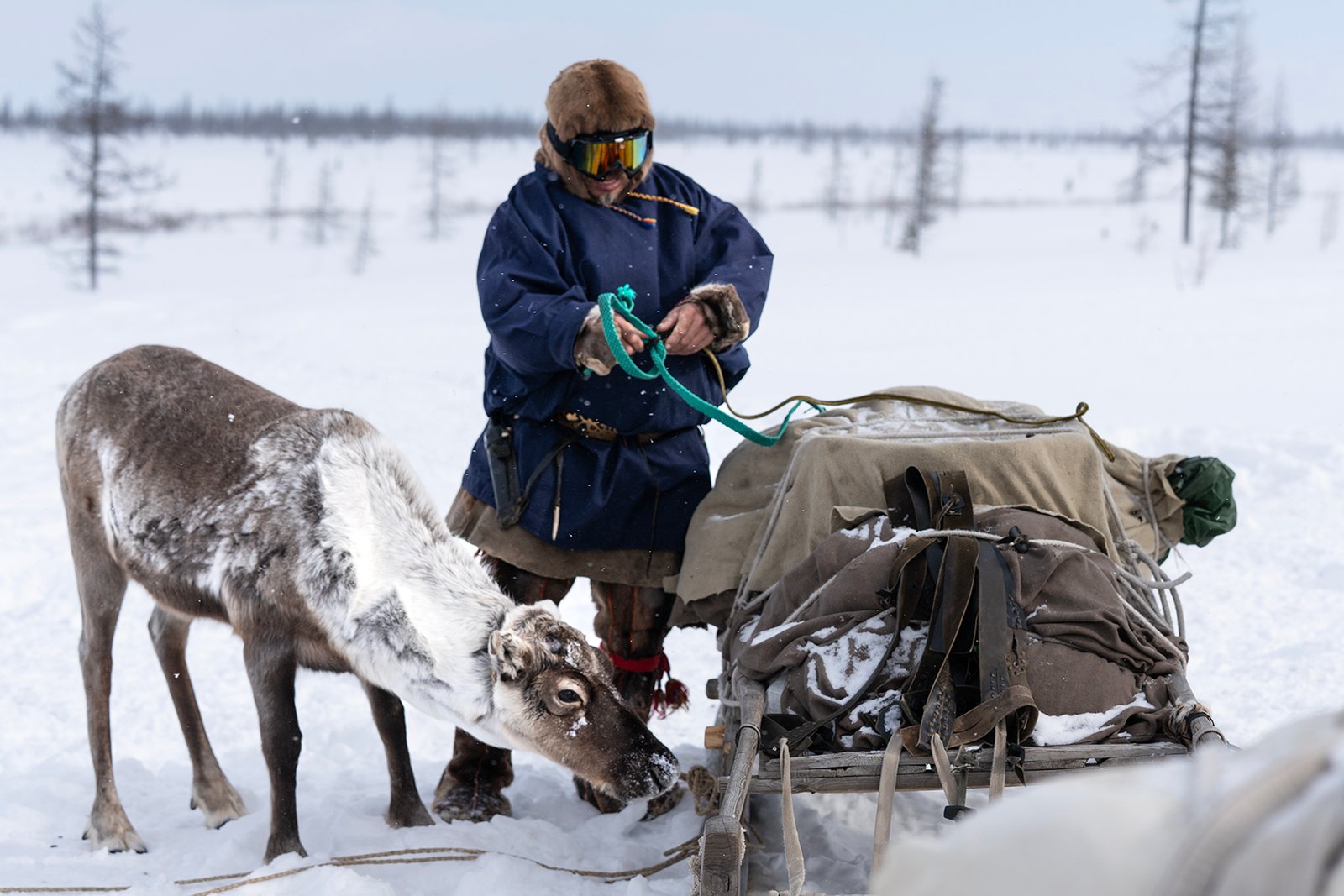
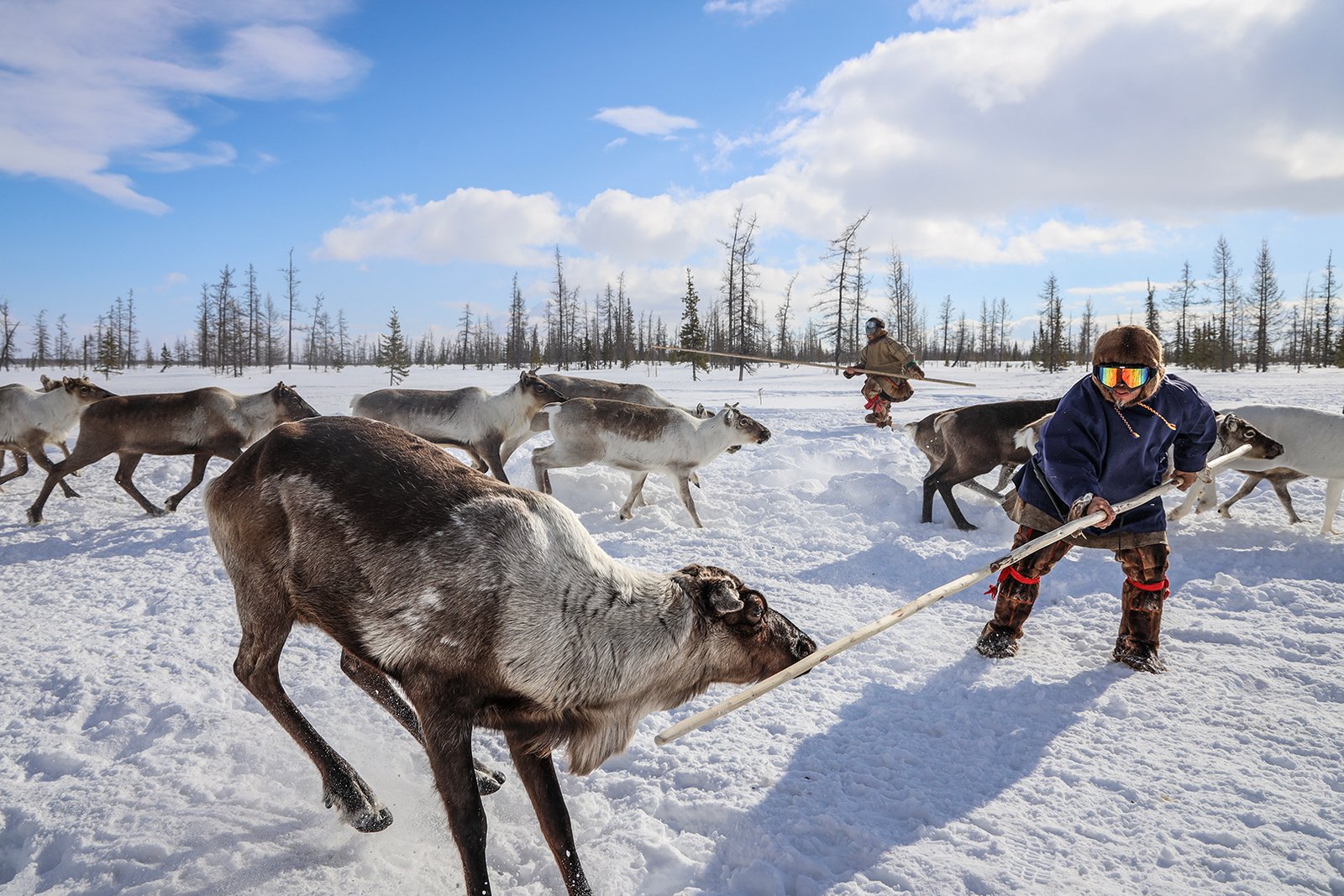
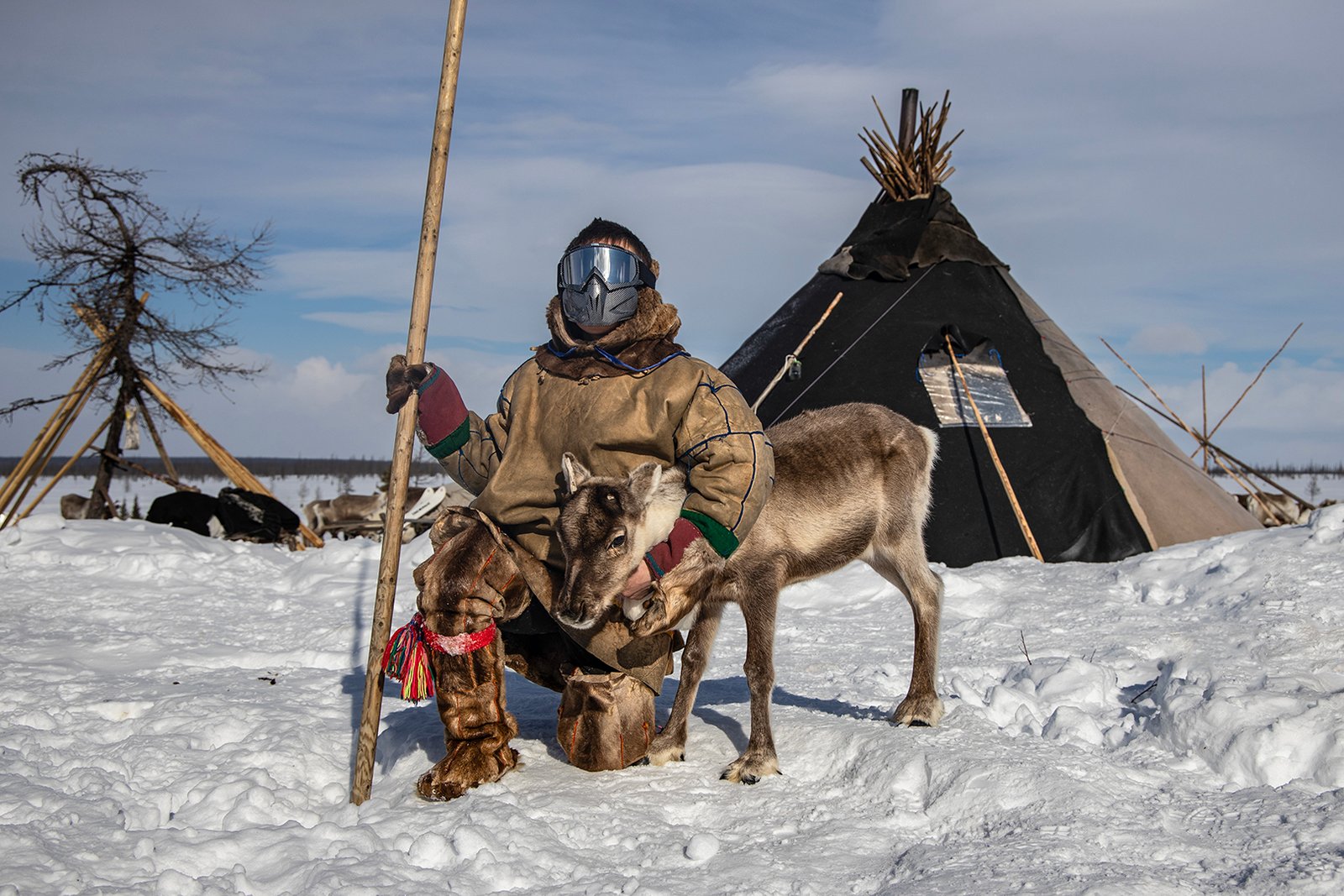
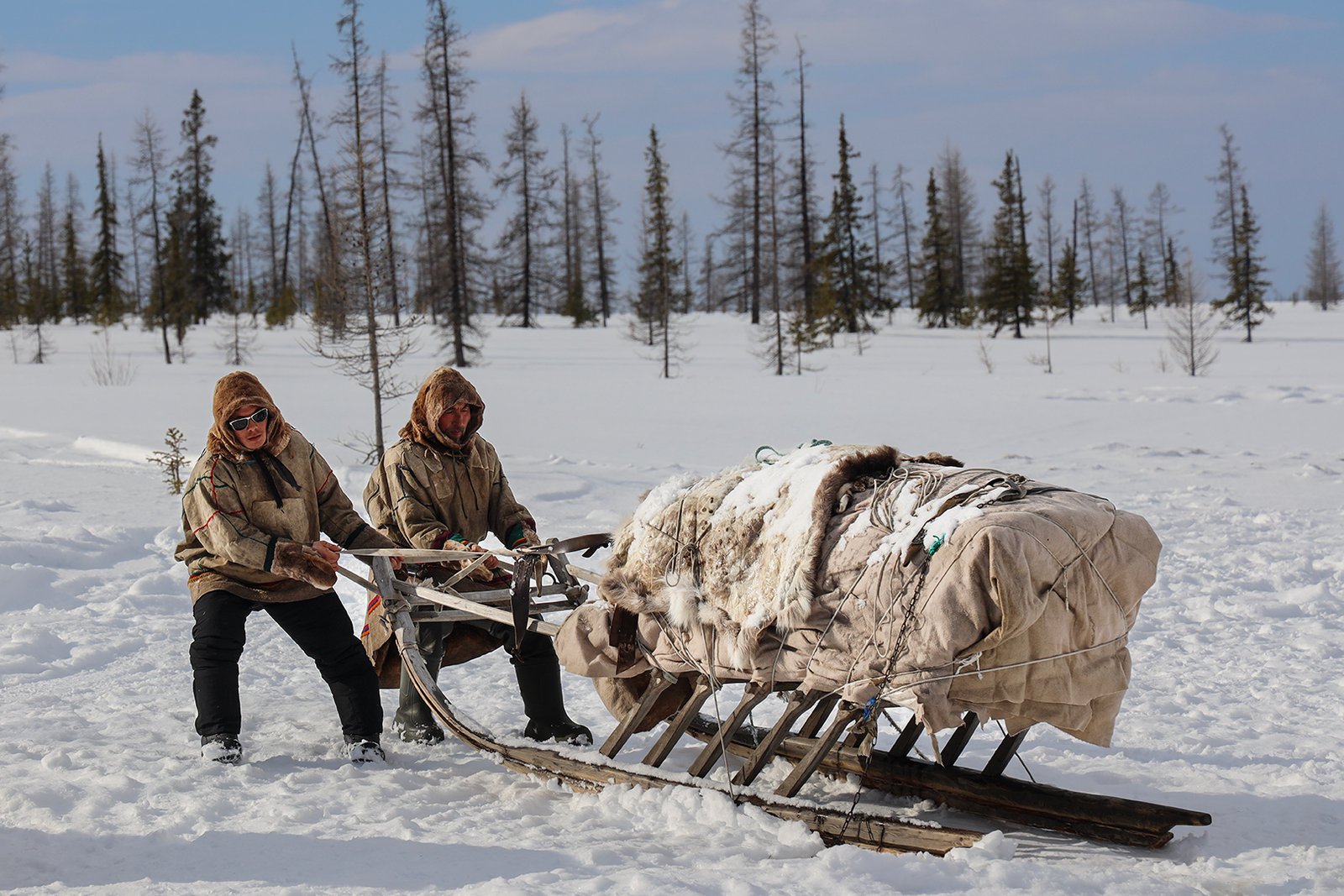
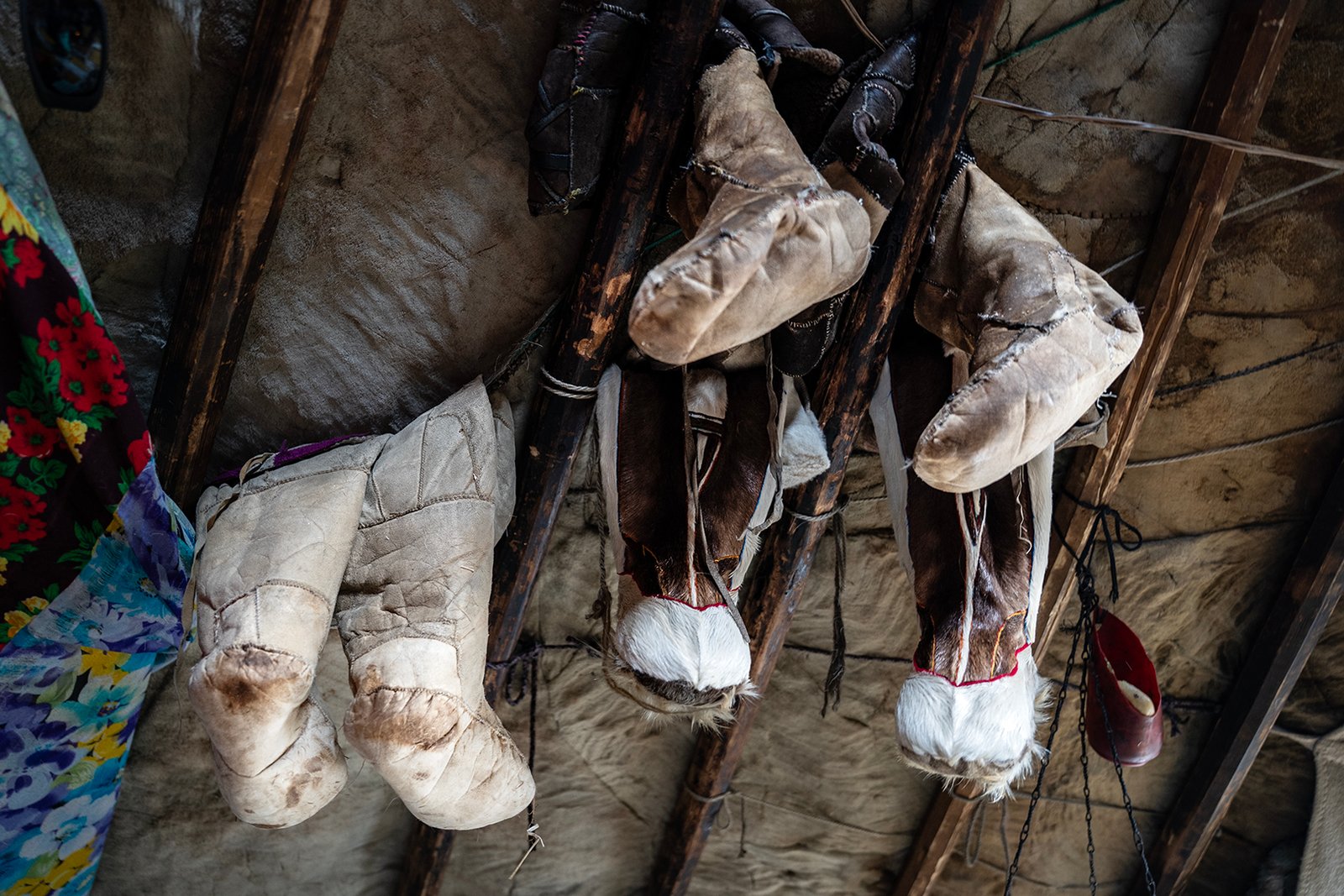
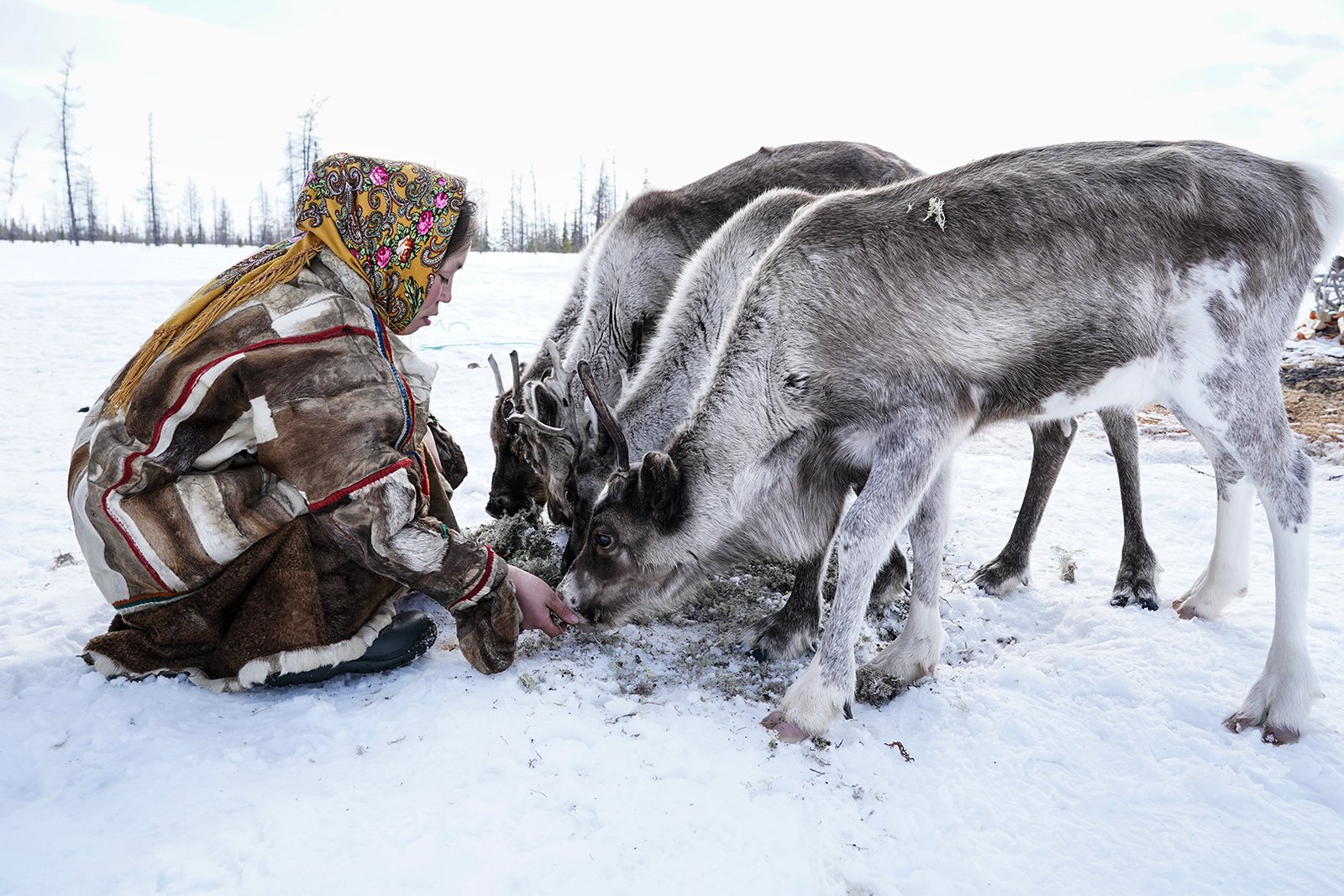
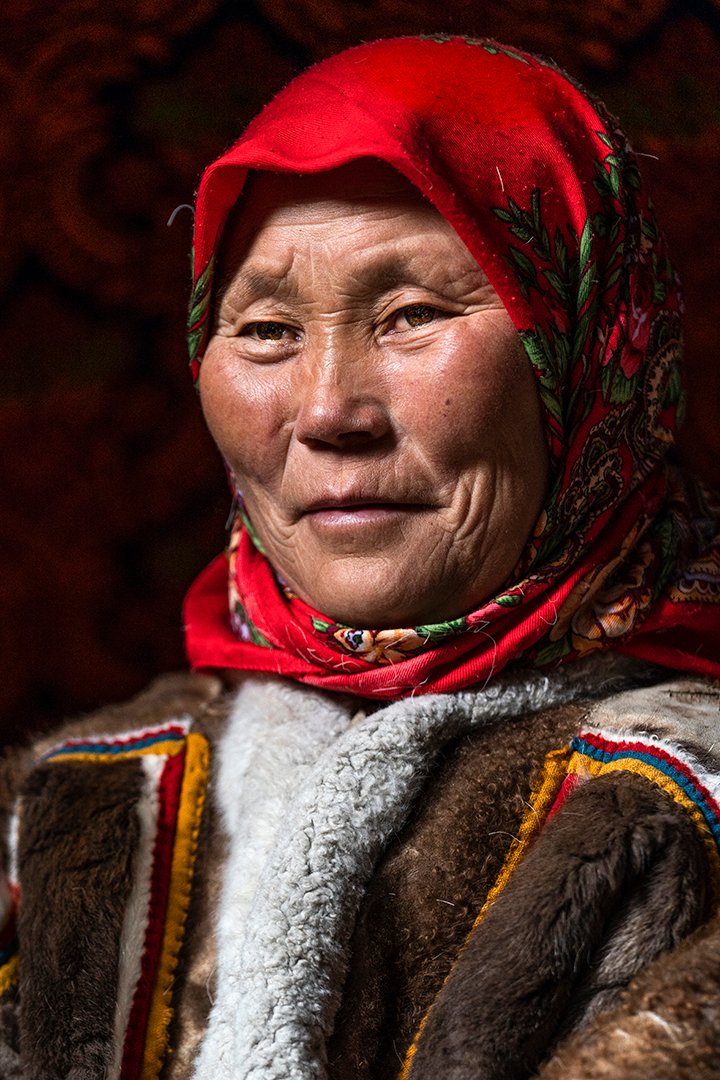
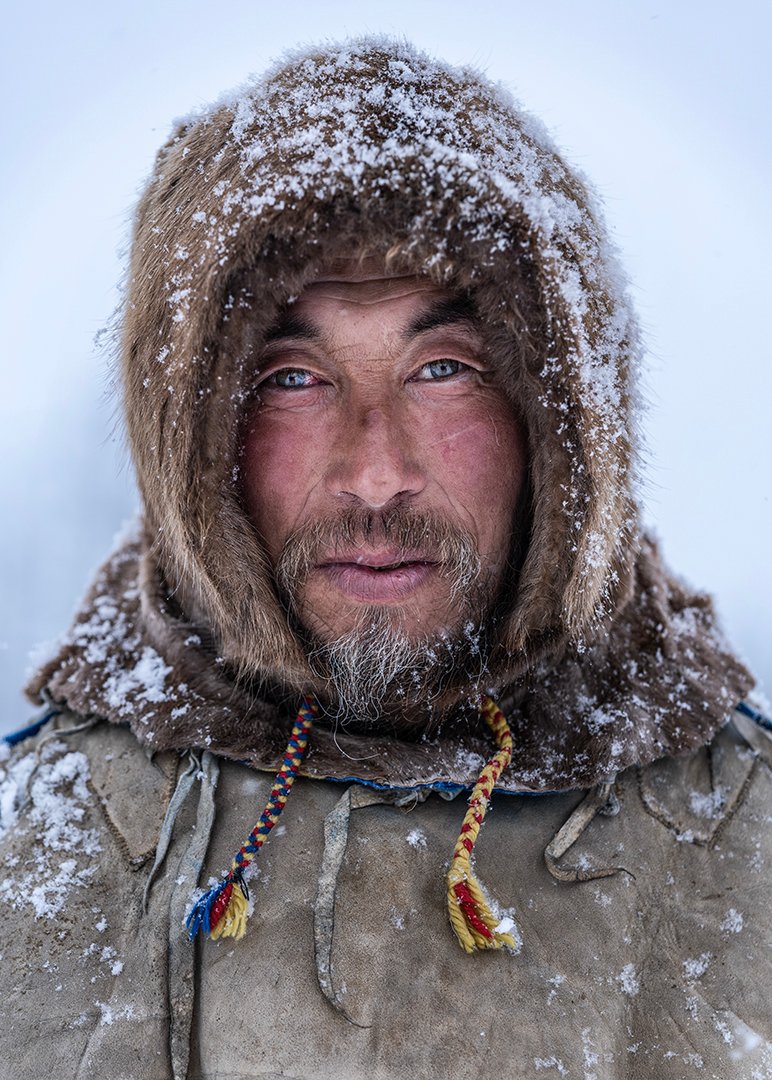
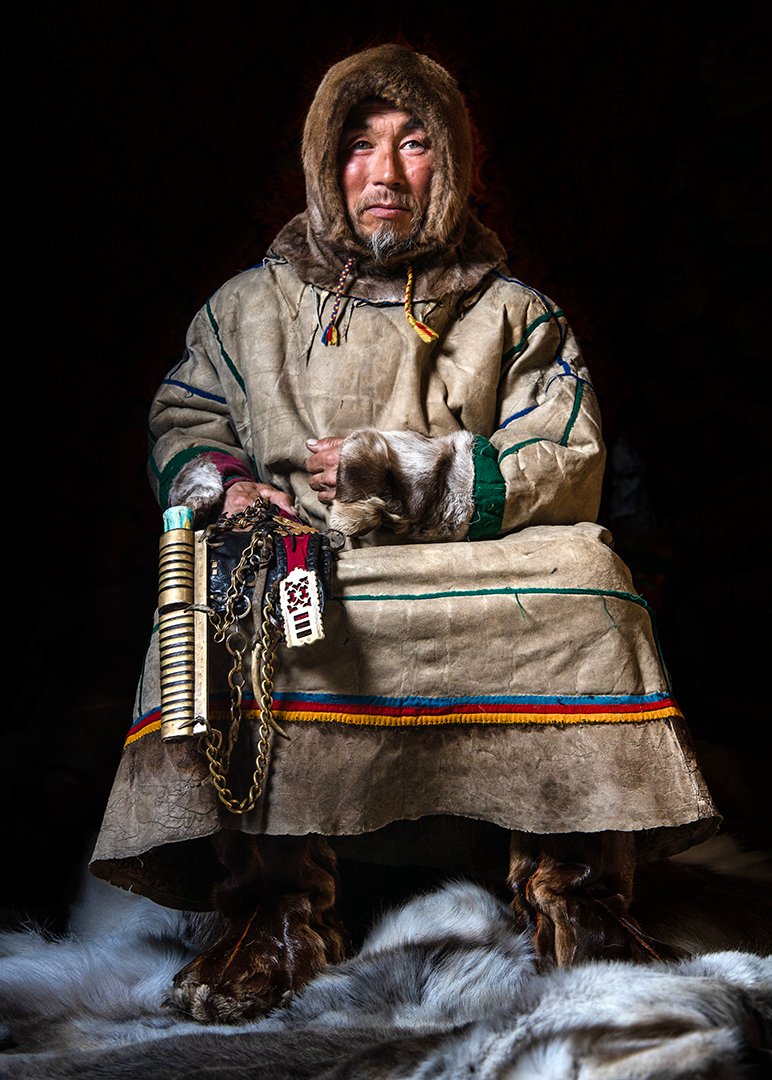
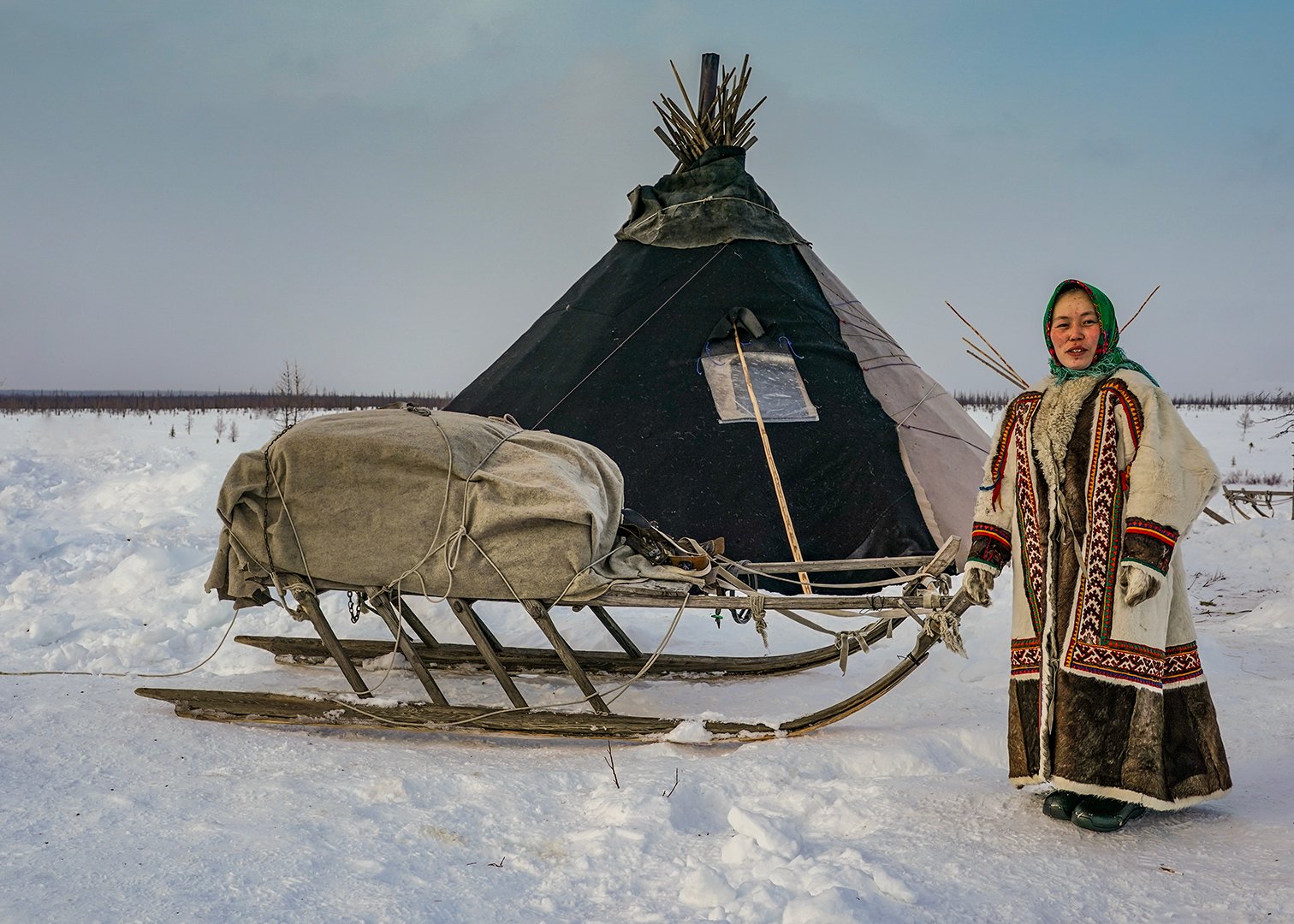
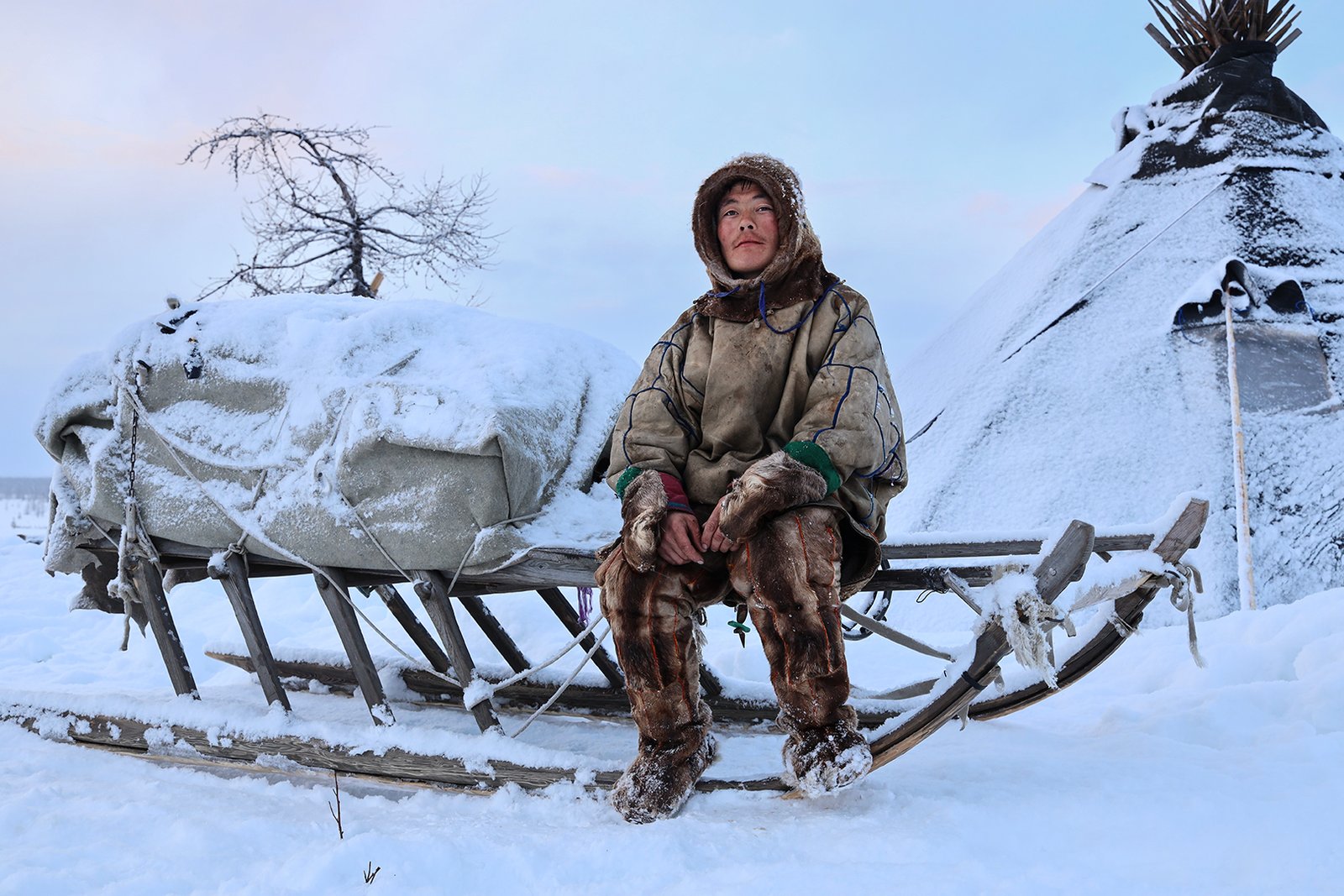
The Nenets traditional clothing include a malitsa (long puller piece of clothing made out of reindeer pelts with the fur on the inside and with a sewn on hood and gloves) and sovik (clothing item worn with fur on the outside, also had a sewn on hood but no gloves) during bitter frost and snowstorms for men and a yagushka for women, pimy (high fur boots) are the traditional fur footwear, made from reindeer skin taken from the legs of the animal which called Kamus. Women’s clothing, called panitsa, or yagushka was made out of reindeer fur, with the fur on both, the inside and the outside with reindeer or arctic fox polar and sewn on gloves. The Nenets did not have special clothes for the summer. Festive clothing differed from everyday clothing. Women’s festive clothing was richly decorated with fur ornaments, and the men’s festive clothing was of a lighter colour. The double layer clothing with fur on the inside and the outside was adapted to severe winter cold and had hygienic qualities.
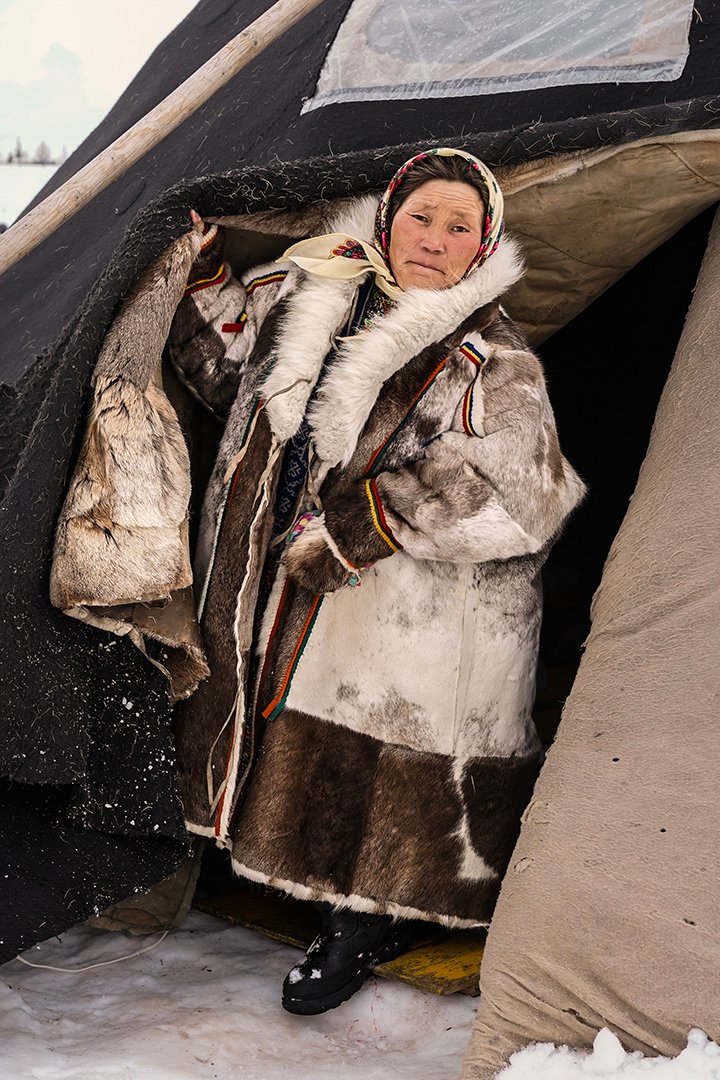
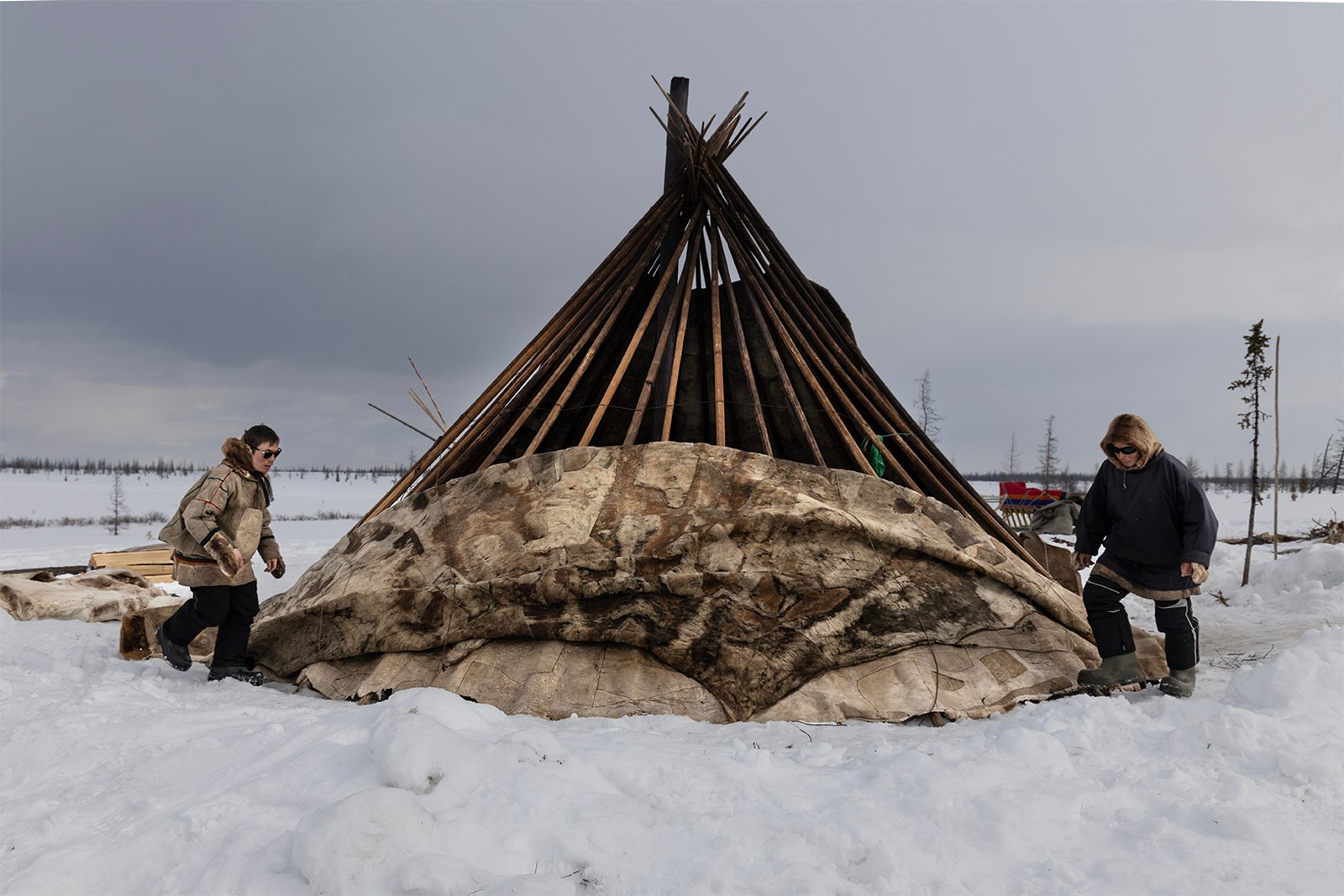
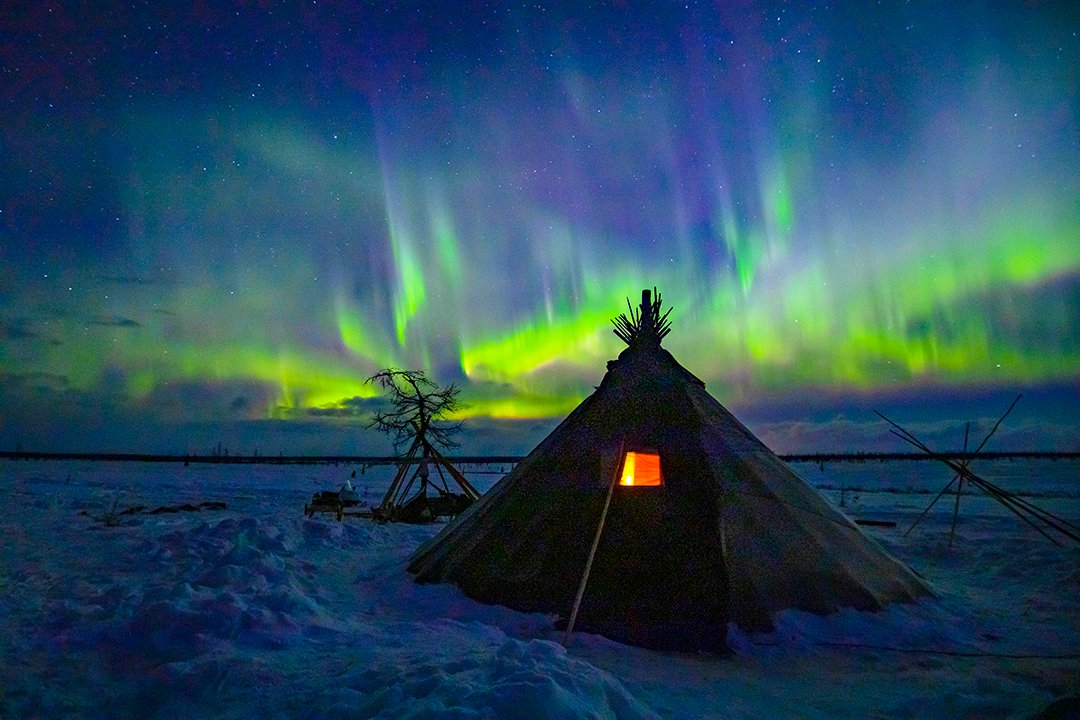
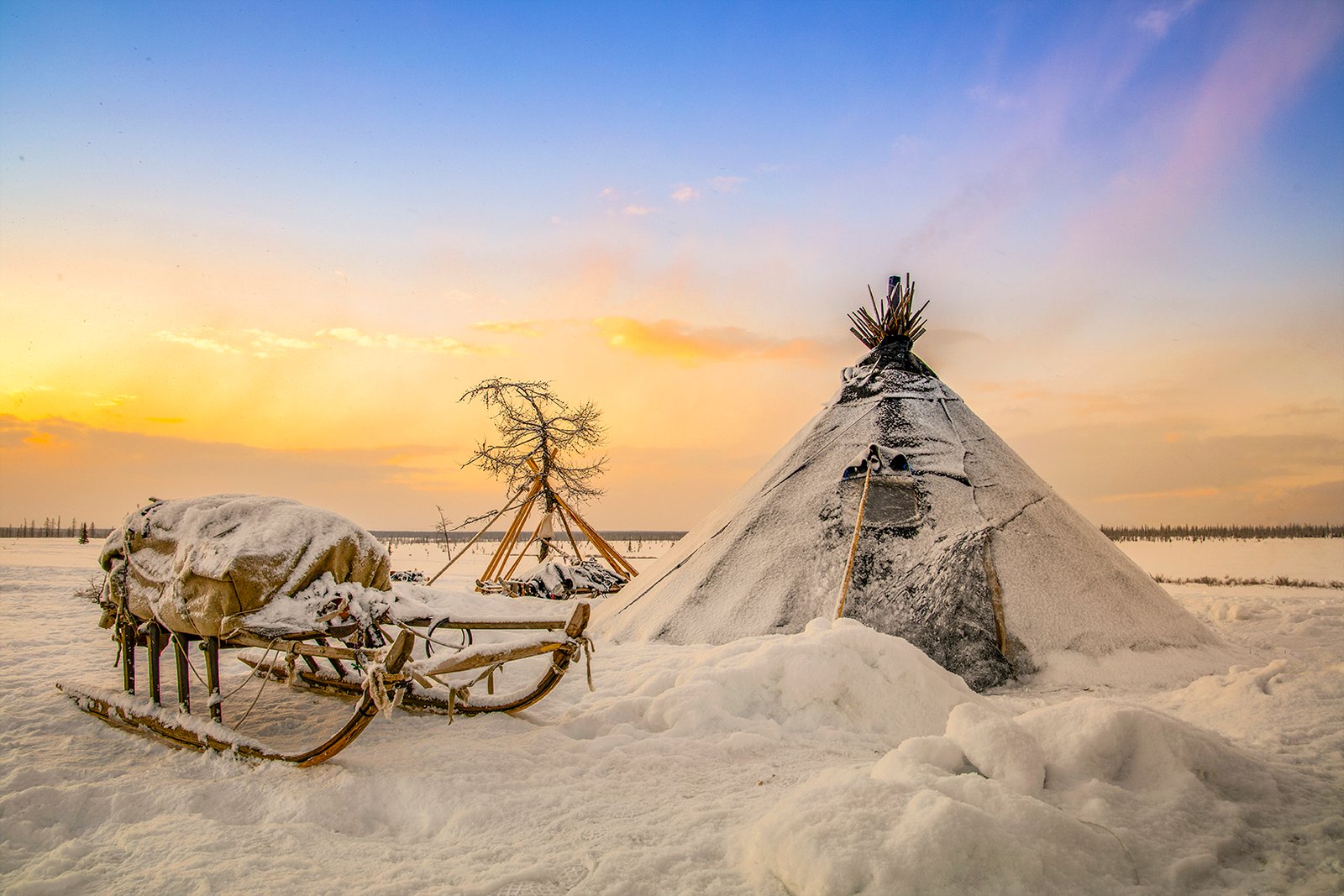
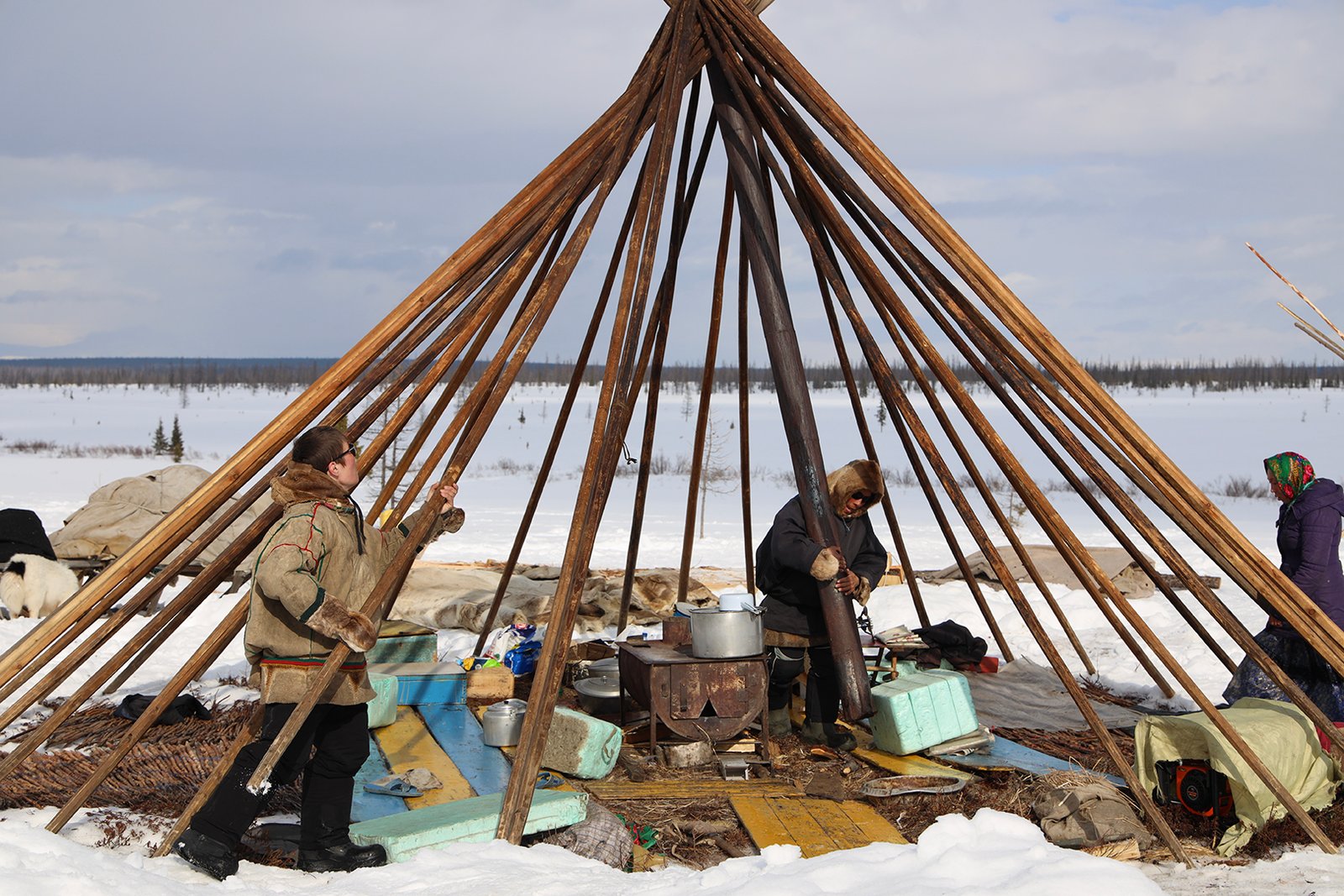
The chum is a temporary dwelling used by the nomadic. It is the living space for them. Made of tall poles in the form of a cone and covered with sewn together reindeer skin for use in winter and canvas in the summer. In the centre of the chum they set up metal stove. The floor is covered with willow twigs on top of which woven mats/board are placed and last reindeer skins. It serve as sleeping places.
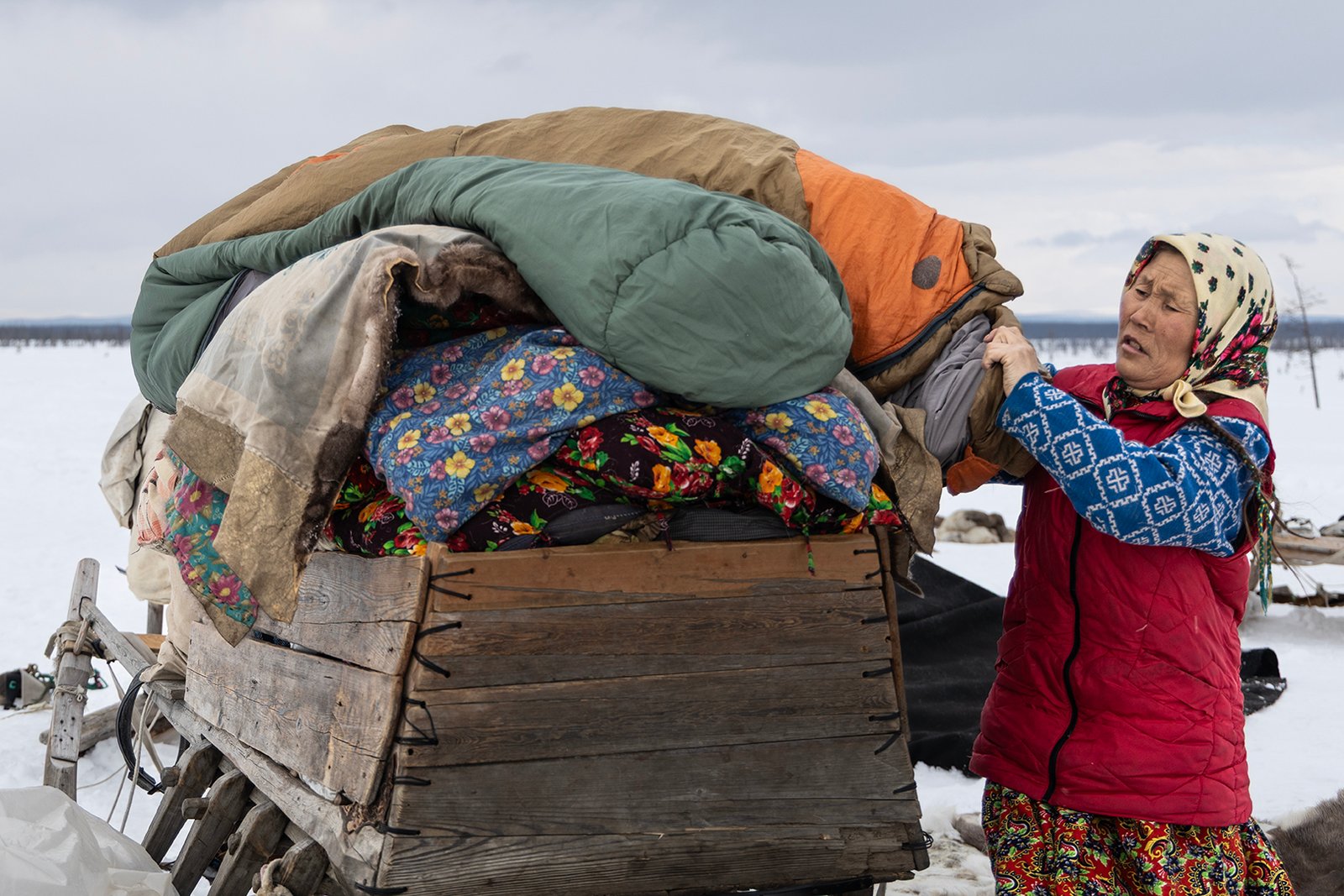
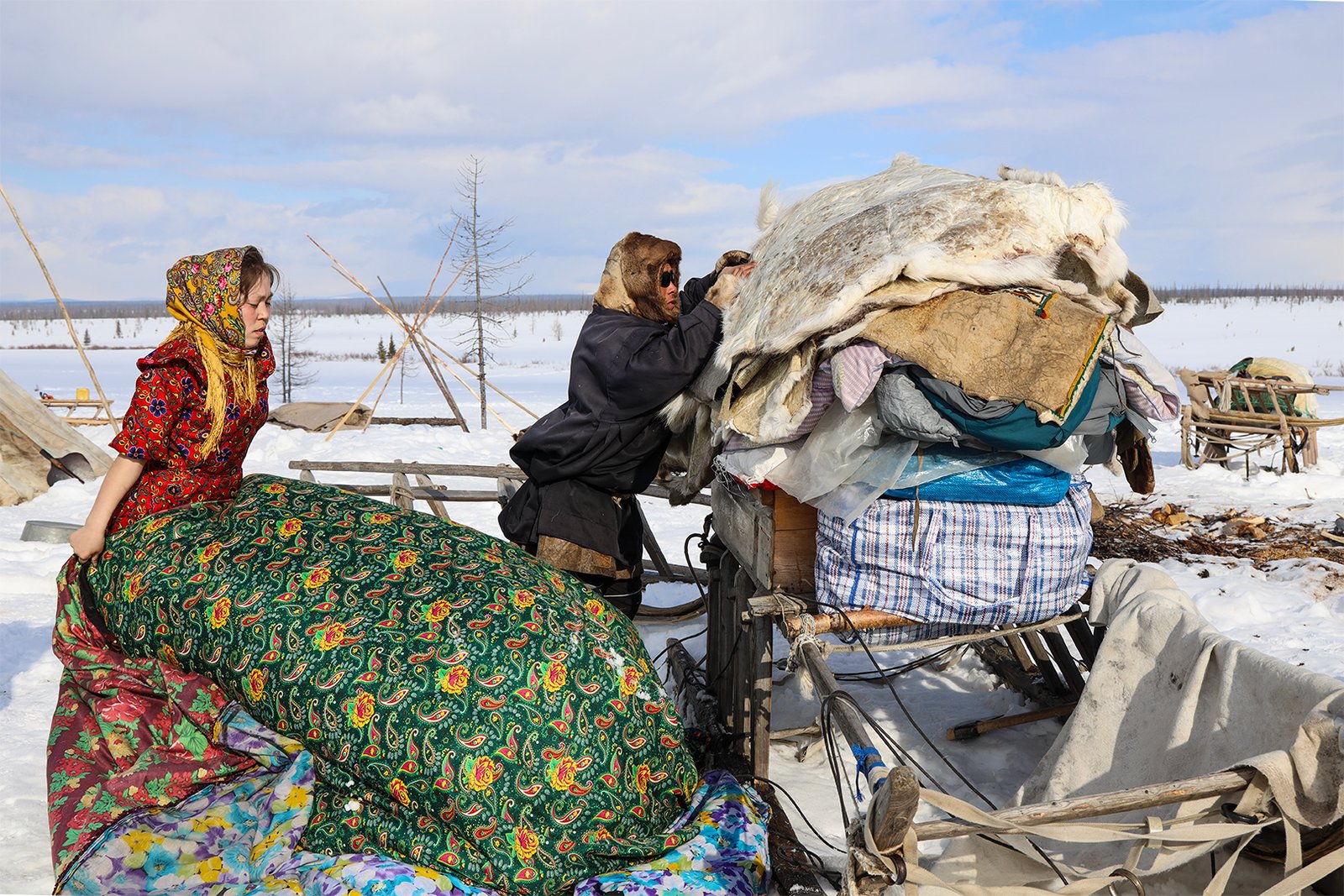
All cookware, dishes, and clothes are hung inside the tent on poles or ropes. What is not needed for that day remains unpacked and is kept on the sled. There are several types of sleds : men’s, women’s, children’s, and cargo. Each reindeer team has one specially trained lead reindeer that goes in front of a team of four to six reindeer.
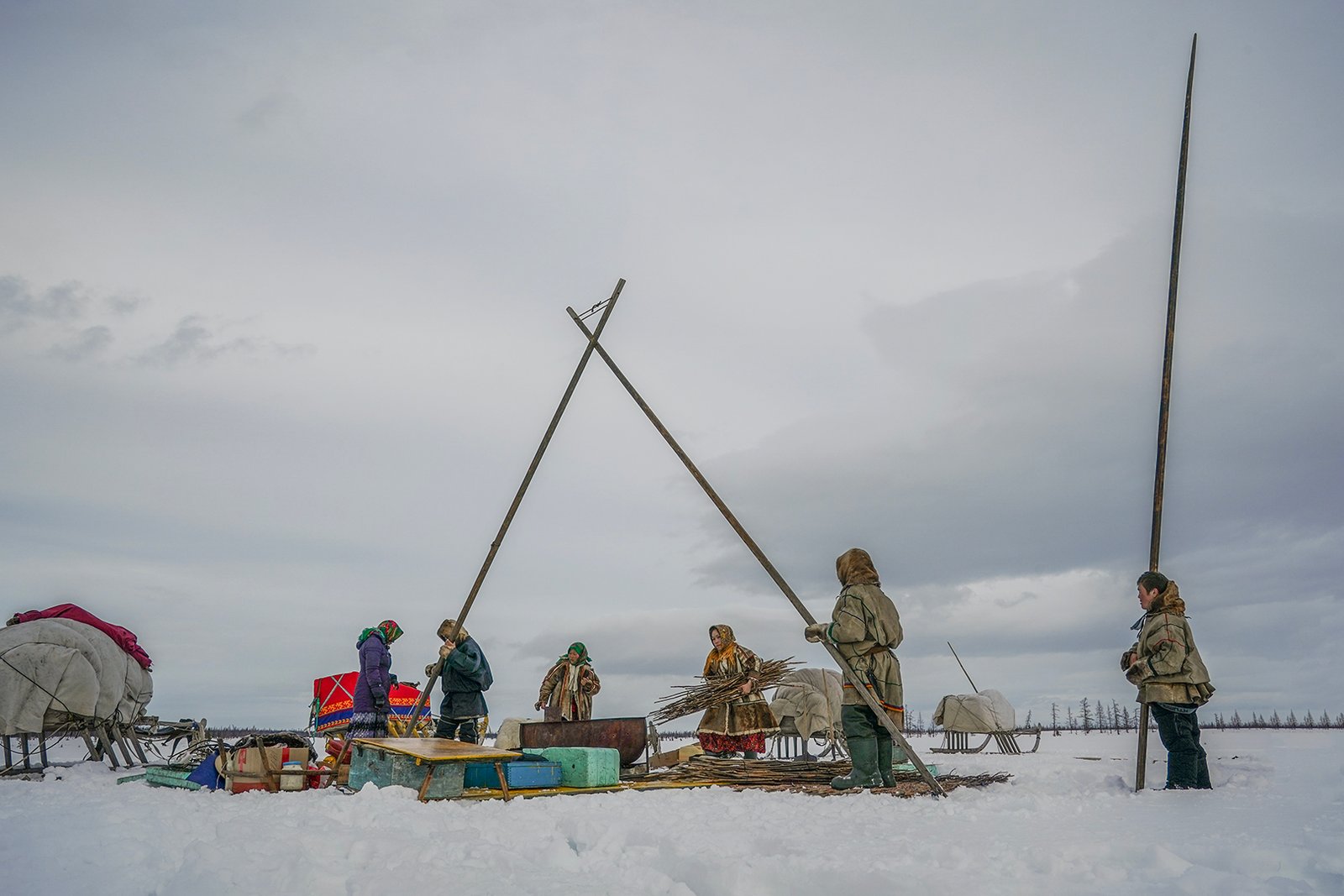
Nenets lifestyle is bound to the annual migration cycle of the reindeer. Their herds travel for more than thousand kilometres every year. An abundance of reindeer moss is extremely important when choosing the place for winter camping. A winter tent is set up in one place for two weeks or more. Every day the herders make a long trip in order to gather the whole herd. The reindeer that had wandered away, are brought back by herding dogs.
When there is no more reindeer moss left near the camp, the herd is driven to a new location. However the tent stays in its place and is moved only when the distance between it and the new grazing area becomes too long. Deep winter snow and the ice crust that forms during cold spells after a thaw are extremely unfavourable for reindeer herding. At those times, many reindeer die of hunger not being able to get to reindeer moss through the deep snow.